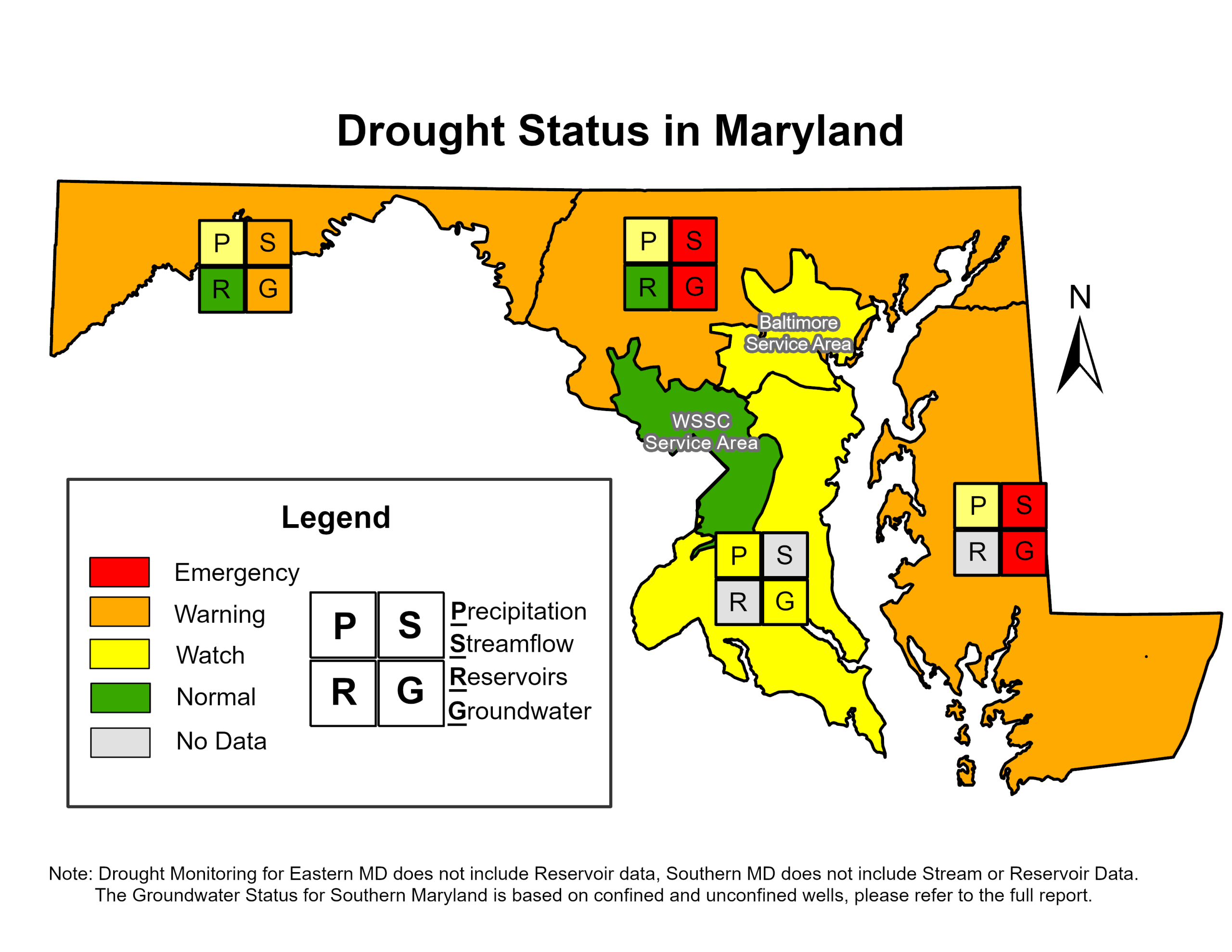
No statewide water restrictions; Baltimore City announces voluntary water use restrictions; Warnings in effect for western, central and eastern Maryland, drought watch in southern Maryland
BALTIMORE (May 14, 2026) – The Maryland Department of the Environment (MDE) today announced that large areas of the state are under a drought warning.
Baltimore City has issued voluntary water use restrictions for areas served by its water system, which also serves areas of Anne Arundel, Baltimore, Carroll, Harford and Howard counties. The Town of Middletown in Frederick County, citing groundwater conditions, has prohibited lawn watering and called for voluntary water conservation.
While there are currently no statewide water shortages or restrictions, three consecutive years of dry weather and recent lower-than-average rainfall amounts mean voluntary water conservation by homeowners and businesses is encouraged.
“Every drop counts when it comes to the smart use of water,” said Maryland Department of the Environment Secretary Serena McIlwain. “We all play a role in protecting our water supply, our ecosystems, and our economy. By voluntarily conserving water today, we can avoid stricter mandates in the future.”
Droughts are not unprecedented in Maryland history. Major events occurred in the 1930s and 1960s, and a statewide drought emergency with mandatory water use restrictions was declared in 1999.
Maryland uses a staged system to provide guidance to the public on water usage. A drought “watch” is an early-stage alert for the state to monitor conditions more frequently and suggest voluntary conservation. A “warning” means worsening conditions and increased coordination between the state and water suppliers. Western, central and eastern Maryland are under a drought warning, and southern Maryland is under a drought watch.
The principal cause for the worsening conditions now being seen is a deficit of rainfall over the past several months – about three inches per month on average compared to a normal average of four inches per month. This accumulating deficit leads to lower than normal groundwater levels and stream flows, causing impacts that recover slowly even with rain.
For private wells, voluntary conservation is encouraged statewide, particularly in shallow aquifers. Farmers should consult with local soil conservation districts and the U.S. Drought Monitor to assess conditions and support water management strategies.
Updates on drought conditions are available on our website.