

Larval striped bass appeared to have enough to eat in 2023 and 2024
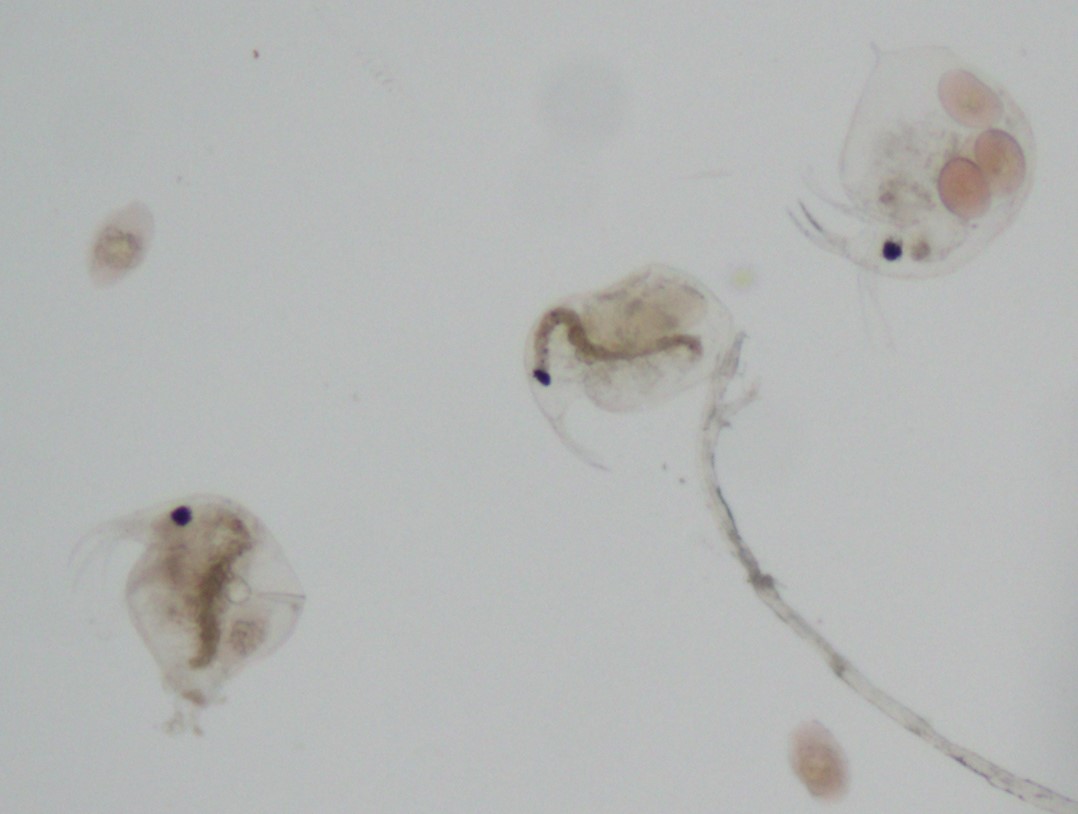
Cladocerans, or water fleas, from the stomach contents of a larval striped bass, viewed under a microscope. Shannon Moorhead/DNR
The availability of tiny plankton that larval striped bass eat during their first weeks of life does not appear to be a leading factor for the recent poor spawning success of the fish in Maryland, according to a new study by scientists at the Maryland Department of Natural Resources.
The findings suggest that one leading theory about the poor spawning success of striped bass—that larval striped bass have missed important blooms of zooplankton to feed on—is not to blame for the consecutive years of low numbers of juvenile striped bass in the Chesapeake Bay since 2019.
The study, published late December in the journal Marine and Coastal Fisheries, analyzed stomach contents of weeks-old striped bass in the Choptank River from 2023 and 2024 and compared them to historical data on larval striped bass diets in the Choptank in the 1980s. While these two recent years had poor year classes, meaning spawning female striped bass produced low number of juveniles in those years, the 1980s dataset included a full range of year-class outcomes.
They found that the young striped bass had enough to eat in 2023 and 2024, with plankton buffets available at similar levels to high spawning years.
“When we got done, basically a strong year class like the one in the Choptank River in 1989 didn’t really look different from 2023 or 2024 in terms of feeding,” DNR fisheries biologist Jim Uphoff, the lead author of the study, said. DNR biologists Shannon Moorhead, Alexis Park, Carrie Hoover, Marisa Ponte, and Jeffrey Horne were also authors on the study.
Previously, scientists had wondered if a “mismatch” of the timing of zooplankton blooms and larval striped bass looking for their first meal could be a major cause of recent low year-class success. By largely ruling out that “match-mismatch hypothesis” as a leading driver of recent poor spawning success, the study helps biologists home in on the most likely reason for the low recruitment.
To collect the feeding data on the larval striped bass, the biologists pulled a large plankton net through several sites on the Choptank River in the weeks after known striped bass spawning. Bringing jars of preserved river water collected from the nets back to the lab, they sifted through a layer of fine organic matter in pans to find the larval striped bass and white perch, only between 5 and 10 millimeters long. The two species share a nursery, eat the same zooplankton, and closely resemble each other, requiring individual identification under a microscope.
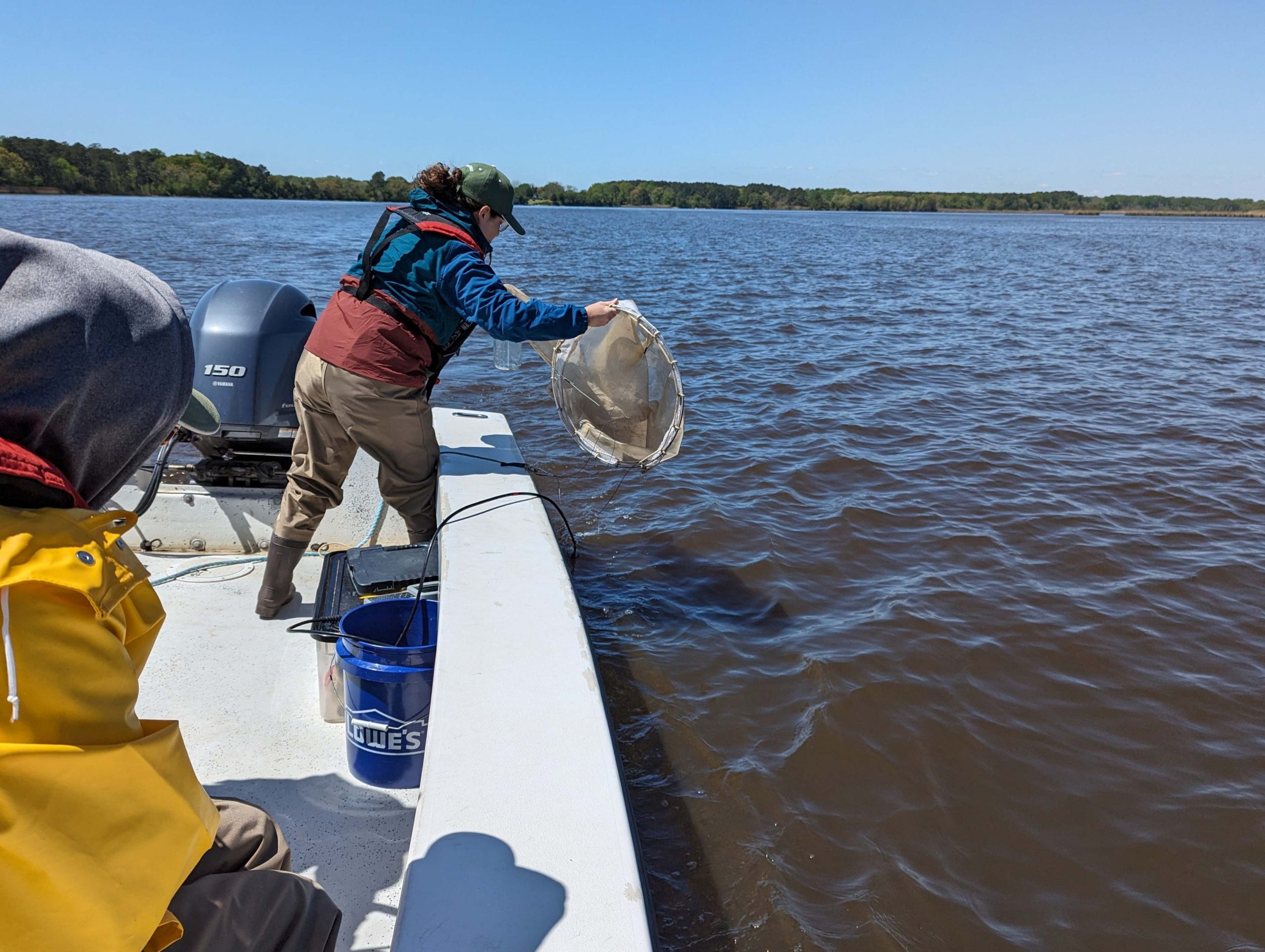
Maryland Department of Natural Resources biologist Marisa Ponte deploys a plankton net in the Choptank River. Joe Zimmermann/DNR
The DNR team used dissecting needles and microscopes to analyze the stomach contents of the larval fish. They also digitized historical data from larval surveys on the Choptank River in the 1980s.
After hatching, larval striped bass first consume their yolk sac and then find their first meal in the zooplankton that swim in the water column. They mainly eat copepods (microscopic, antennaed crustaceans that inspired the Plankton character in “SpongeBob SquarePants”) or cladocerans, commonly called water fleas.
They found that striped bass larvae had a high amount of copepods to eat in 2023 and 2024, as well as a lot of cladocerans in 2024. White perch followed similar patterns.
Plankton feeding levels were variable in the years of the 1980s, but the study found feeding was not closely correlated with the results of the juvenile index from the young-of-year survey, DNR’s longstanding survey used to measure the year class success of striped bass and other Bay fish.
Years with large amounts of juveniles, like 1989, had similar availability of zooplankton to years with poor recruitment, like 2024. Uphoff said successful year classes appear to thrive based on an adequate amount of zooplankton coinciding with several other factors that hit in their favor. Moorhead recorded a presentation on the findings from the research for the American Fisheries Society meeting last year.
The study also found that the abundance of striped bass larvae sized 8-10 millimeters matched up closely to the abundance found in the older juveniles of the young-of-year survey, suggesting that the success of the year class was already largely determined before the fish’s third week of life, when they are smaller than a grain of rice.
Uphoff described the spawning strategy of striped bass as a gambler’s bet—with a slight increase in temperature, they go all in. “In enough cases, the timing is bad, and that doesn’t work,” he said. “But every once in a while, they have a big year class.” With a shortened spawning season, it may be harder to hit it right.
“The amount of eggs is okay and the feeding larvae are okay, so now you’re looking at something in between,” Uphoff said. “The big drivers are water flow and temperature. More and more, it’s looking like a temperature issue here, related to climate change. By process of elimination, that’s the next place to look.”
A previous study authored by Uphoff found that the presence of striped bass eggs in spawning areas in recent years appears to be high enough to support good recruitment. Another study, by DNR biologist Angela Giuliano, found that the striped bass spawning season is shortening as early spring water temperatures are rising in the Bay.
By seeming to rule out the early feeding period as a deciding factor for year-class success, this recent zooplankton study suggests that the shortened spawning period is when striped bass are struggling.
“This study is another important contribution to striped bass research by our fisheries biologists at the Maryland Department of Natural Resources,” said DNR Assistant Secretary of Aquatic Resources Kate Charbonneau. “Our scientists have brought us another step closer to understanding the ongoing low juvenile recruitment of striped bass. DNR is a science-based agency, and research like this is important for guiding our management decisions.”
DNR biologists have emphasized the need to enforce protective regulations for adult striped bass in order to maintain a healthy breeding population. When the environmental conditions are right, a good stock of spawners could bring a large year class into the Chesapeake.
By Joe Zimmermann, science writer with the Maryland Department of Natural Resources
